
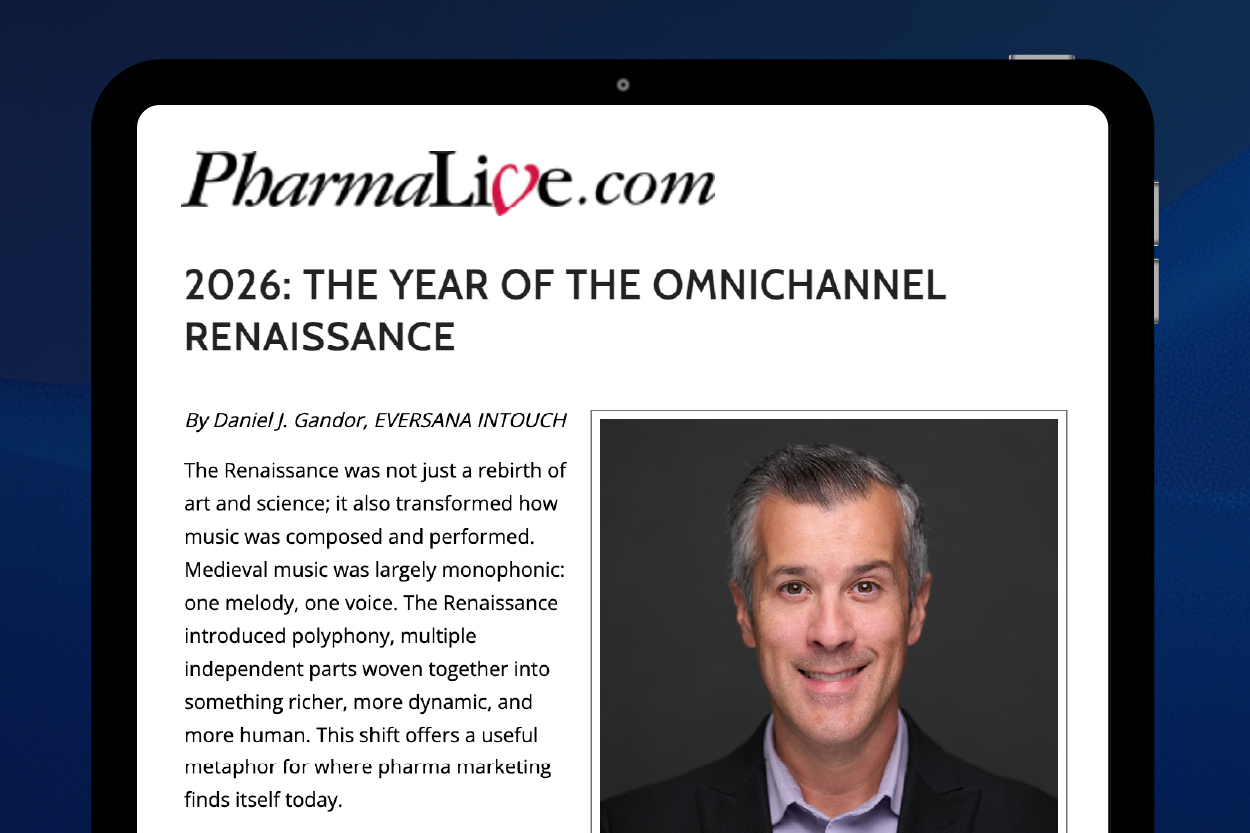
The life sciences industry is entering a new era. In a recent article penned for Med Ad News, Dan Gandor, EVP of Omnichannel Strategy, coined this the “Omnichannel Renaissance.”
Dan explores how brands can transform fragmented tactics into an orchestrated operating system. Here are his three key insights:
1. Integration Is the New Imperative
For years, pharma marketing has relied on disconnected campaigns. The future belongs to brands that can connect at every touchpoint from HCP engagement to patient support to create a seamless journey. Achieving true omnichannel performance requires breaking down silos and fostering alignment among commercial, medical and experience teams through shared operating models and iterative, AI-enabled collaboration.
2. Agentic AI as the Omnichannel Conductor
Omnichannel isn’t just about being everywhere. It’s about being strategic everywhere. Real-time data and analytics are the engine behind personalization, enabling brands to deliver the right message at the right moment. Agentic AI is evolving omnichannel from experimentation to scaled execution. AI agents act as a conductor by analyzing signals, identifying patterns, and orchestrating next-best experiences in real time to keep strategies aligned and adaptive.
3. Modular Content Is the Foundation
AI-powered modular content systems help to amplify empathy, not replace it. Instead of creating countless bespoke assets, teams now design structured content architectures—core messages and components that can be reused and recombined intelligently. This approach provides the precision and standardization needed for omnichannel to scale, while AI accelerates adaptation and personalization without adding cost or complexity.
“The renaissance is here. Companies that embrace orchestration and design thinking will lead the way.”
As omnichannel evolves from buzzword to business-critical strategy, Dan’s vision offers a roadmap for brands ready to lead.
Read the full article in Med Ad News.